
Finding food freedom with nutritionist Charity King
- Wellbelle
- Oct 2
- 6 min read
Updated: Oct 25
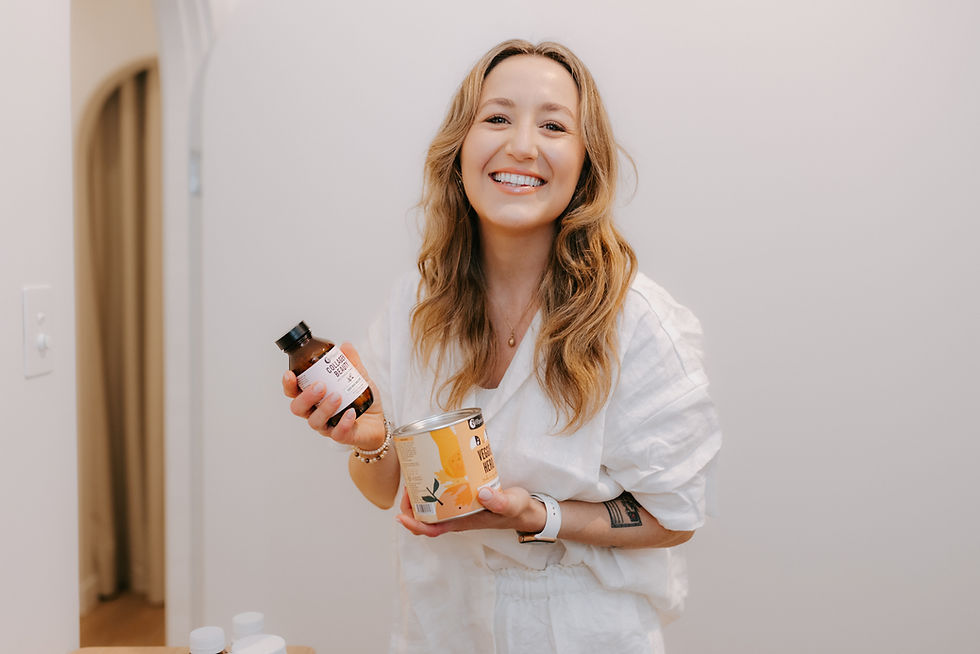
"Food freedom is sustaining a positive relationship with food where you can naturally choose and enjoy foods that make you feel good, and that taste good - without anxiety, guilt, confusion, or shame. It is having peace with what you eat."
In this interview, we chat with Charity King, a Northern Beaches–based Nutritionist and Lifestyle Coach with over a decade of experience helping people heal their relationship with food, rebuild trust in their bodies, and find balance through practical, science-backed nutrition. Having overcome her own challenges with disordered eating, eczema, allergies, and gut issues, Charity now helps others find clarity and confidence amidst the noise of diet culture.
We spoke with her about approaching weight loss with self-compassion, the importance of protein and gut health, and the small shifts that lead to lasting change.
What advice would you give to women wanting to enter a weight loss phase?
If you are keen to enter a weight loss phase, I first recommend to ask yourself if this is the right time for you to do so in a sustainable and healthful way? Next, be ready to make some small changes to begin with. When it comes to fat loss, I recommend to make it your goal to lose each kilo once, rather than back and forth loss and gain cycle over and over again. How do we do that….by getting rid of the “all or nothing” approach which has left many of us gaining weight back (plus interest) due to burn out.
Instead, making small adjustments that can get you into a calorie deficit that leads to weight loss. Think, instead of trying to commit to an hour of exercise each morning, go for 30 minutes 3 days a week. Instead of cutting out food groups like carbohydrates completely, measure our your serves of carbs at your meals so you can still enjoy them without depriving yourself of foods you love. A progress over perfection mindset and consistency will be you best allies!
Be prepared to track what you are eating, either in an app, notes in your phone or written food diary - this helps you be honest with yourself on where your current food and nutrition habits are at, so that you and your nutritionist know where to make adjustments to cause the least amount on stress on your routine and system while still making progress.
What are some common nutrient deficiencies you see among your clients?
Commonly I work with folks to get their foundational macronutrients aka food groups balanced first. The most common deficiencies I see here are water and protein! Without adequate hydration our systems will struggle to be energised and utilise the nutrients in our diet and supplements properly. Without adequate protein, you can struggle to feel full and satisfied with your meals and can be low in energising and stress reducing B vitamins.
Micronutrient wise I most commonly see low levels of iron and magnesium, two essentials for energy, focus, proper sleep and cell-renewal. Thankfully with adjustments to meals, the addition of quality supplements if needed and healthy habits like more movement and even swims in salt water, we can get get these levels up and see people feeling more like themselves, moving with more ease, reducing afternoon fatigue and sleeping like babies once they do!
How important is protein and what is the recommended intake per day?
Proteins make up all the cells across our body, not just muscles! Our organs, skin, hair, nails, blood and hormones are all based on proteins. Prioritising protein at all of your meals can keep you more full and satisfied for better energy and mental focus, stable moods as well as less sweets cravings and over eating later in the day for many people.
It is recommended to maintain health and body composition for most people to aim to consume 1-1.5g of protein per kg of body weight. When recovering from injury or trying to build muscle, I recommend increasing this to 1.5-2g protein per kg of body weight, or more depending on the individual.
As a nutritionist I recommend starting by having at least 20-30g of protein at each meal, as we best utilise proteins when it is spread out throughout the day. This could look like adding protein or collagen powder to a morning smoothie or enjoying 2 eggs and some smoked salmon on your avocado toast, 120-150g chicken, salmon, lean beef or tofu at lunch and dinner.
If you are more into grazing, add proteins source with your snacks like Greek or soy yogurt with your fruit, adding some tuna or salmon to your hummus when dipping in crackers and veg or baking healthy muffins and protein balls with protein or collagen powder. This leads to a healthier body, strong digestive system, beauty benefits as well as fullness and satisfaction which helps us feel and look our best inside and out.
What are some key supplements you recommend to your clients?
Each person is different and I will recommend supplements only as needed based on my client’s consultation and any relevant blood-work. For most people dealing with fatigue a quality B Vitamin supplement for energy and stress management in the morning and a sleep-friendly magnesium powder at night can make a world of difference. For those with gut issues, a quality collagen powder can assist with gut healing and digestive enzymes can better break down meals for ease of digestion and healthier stools.
Always check with your Doctor and nutrition professional before starting any new supplement to ensure it will not interfere with any medication or personal medical needs. Natural supplements are still supplements and just like prescription medication should be taken in safe, recommended doses can have interactions and side-affects.
How can we better support our gut health? Could you share some practical tips?
For those who are struggling with digestive issues, I highly recommend getting your gut health assessed with a GI Map test and interpreted by a nutrition professional to get to the root cause of what may be happening. What may be a healthy diet or food for some may not be for others, and this information can make a world of difference.
Many people, myself included lived years with unknown food intolerances, high levels of opportunistic bacteria, parasites and low digestive enzymes that led to years of chronic eczema, weight gain, bloating, irregular stools low energy and depression. Understanding what was happening inside my body and following a science-backed gut healing protocol quite literally saved my life and has improved the lives of hundreds of the clients I support.
For those with decent gut health who want to maintain or continue to improve your digestion here are my top 4 tips:
Eat mindfully and remember to chew as our stomach can’t chew for us. Our saliva contains essential digestive enzymes needed to begin to break down our food before it reaches the stomach which leads to better digestion and less bloating or pain.
Eat a rainbow variety of plant foods like different coloured fruits, vegetables, nuts, seeds, legumes and whole grains that each give us a varied array of fibres, vitamins and minerals to feed your gut bacteria and support optimum health.
Add probiotic-rich foods like yoghurt, kefir, and sauerkraut to your diet for a healthy gut microbiome which has a positive impact on our mental health and longevity.
Manage stress, high stress levels can impact your gut health. Relax in ways that feel good for you, spend time with pets or friends, walks outside, yoga, journaling, listening to your favourite music or deep breathing can keep stress in check.
Are there specific foods or a diet you would recommend someone follow if they have PCOS or Endometriosis?
If you live with PCOS or Endometriosis, good nutrition can positively impact your levels of inflammation, blood sugar, hormone balance and body composition. The best way of eating for for many needing this support is a whole food based diet reminiscent of the Mediterranean way of eating with an emphasis on high protein, omega-3 rich fats and quality whole-food based carbohydrates with minimal processed foods. This doesn’t mean 100% compliance either but 75-80% can make a big positive impact.
If I was to demonstrate this diet as a single meal it could look like this: A savoury breakfast with 2 eggs and egg whites for protein, 1/4 of an avocado and drizzle of olive oil for healthy fats, colourful sautéed veggies for fibre and vitamins and baked sweet potatoes for satisfying whole food carbohydrates.
A dream lunch or dinner could be a 150g wild caught salmon, grass-fed lean beef or organic firm tofu, a salad with a rainbow variety of baked veggies sprinkled with hemp and pumpkin seeds and a serve of brown rice or quinoa.
Of course I understand eating like this is not always practical for every meal, and I am here to listen and learn about your time, budget, tastes and needs to curate a collaborative plan that is as reasonable and enjoyable as possible so you can enjoy life and foods you love within the time and energy you have to give.
Work with Charity
Those interested in tailored nutrition support can contact Charity via her booking page, email, or Instagram. She offers free discovery calls, in-person consultations in the Northern Beaches, and online support for global communities. Charity works with all abilities, teens, families, groups, and couples.
Services Include:
Consultation and personalised nutrition plans
6 and 12-week tailored support and accountability programs
Gut testing and healing packages
Presentations and hands-on workshops for families, teams, and organisations
Contact Information:
Booking Page: Freshwater Nutrition Booking
Instagram: @freshwaternutrition


Comments